
Sonic Pico Park World 1 Guide: Hello, Sonic Pico Park
A stage-by-stage Sonic Pico Park World 1 guide: the Spin Dash lesson, the first loop, the ring prompt and the Tails carry in 1-4.
World 1 is the tutorial world of SONIC PICO PARK. Its four stages teach the Spin Dash, the loop, the ring-sharing prompt, and the flight carry, in that order. None of the stages is hard. The point is to establish the habits the other fourteen worlds assume: charge the dash away from ledges, wait for the group at the plate, and use the flyer as a one-person ferry.
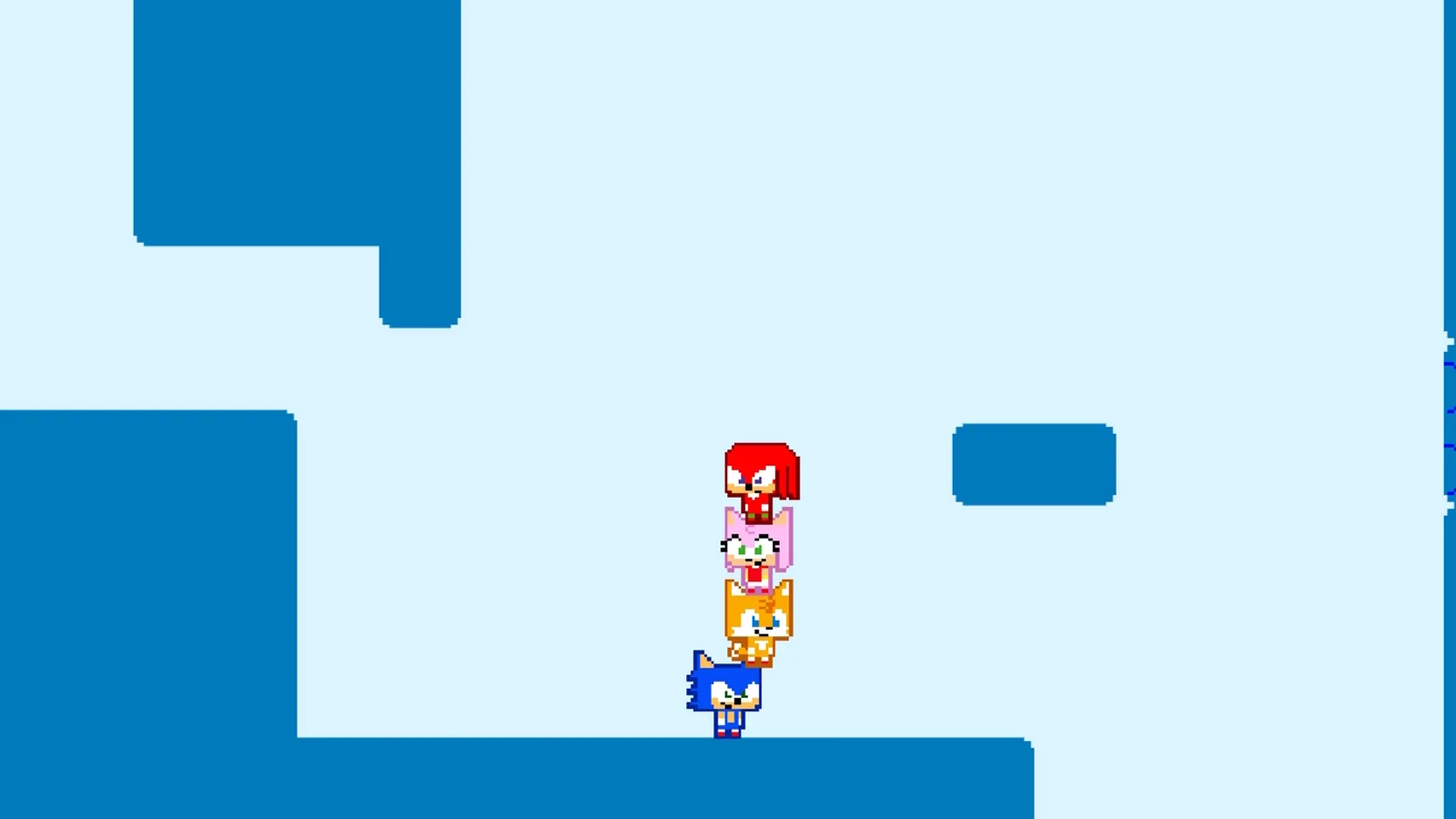
The world is short enough to finish in ten to fifteen minutes with a new group. Do not skip it because one player has already cleared the game. The prompts are the best tutorial in the campaign, and a group that ignores them will learn the same lessons in a harder world.
Learn the dash, learn the loop, learn to share rings, learn to carry a teammate. Then touch the plate together.
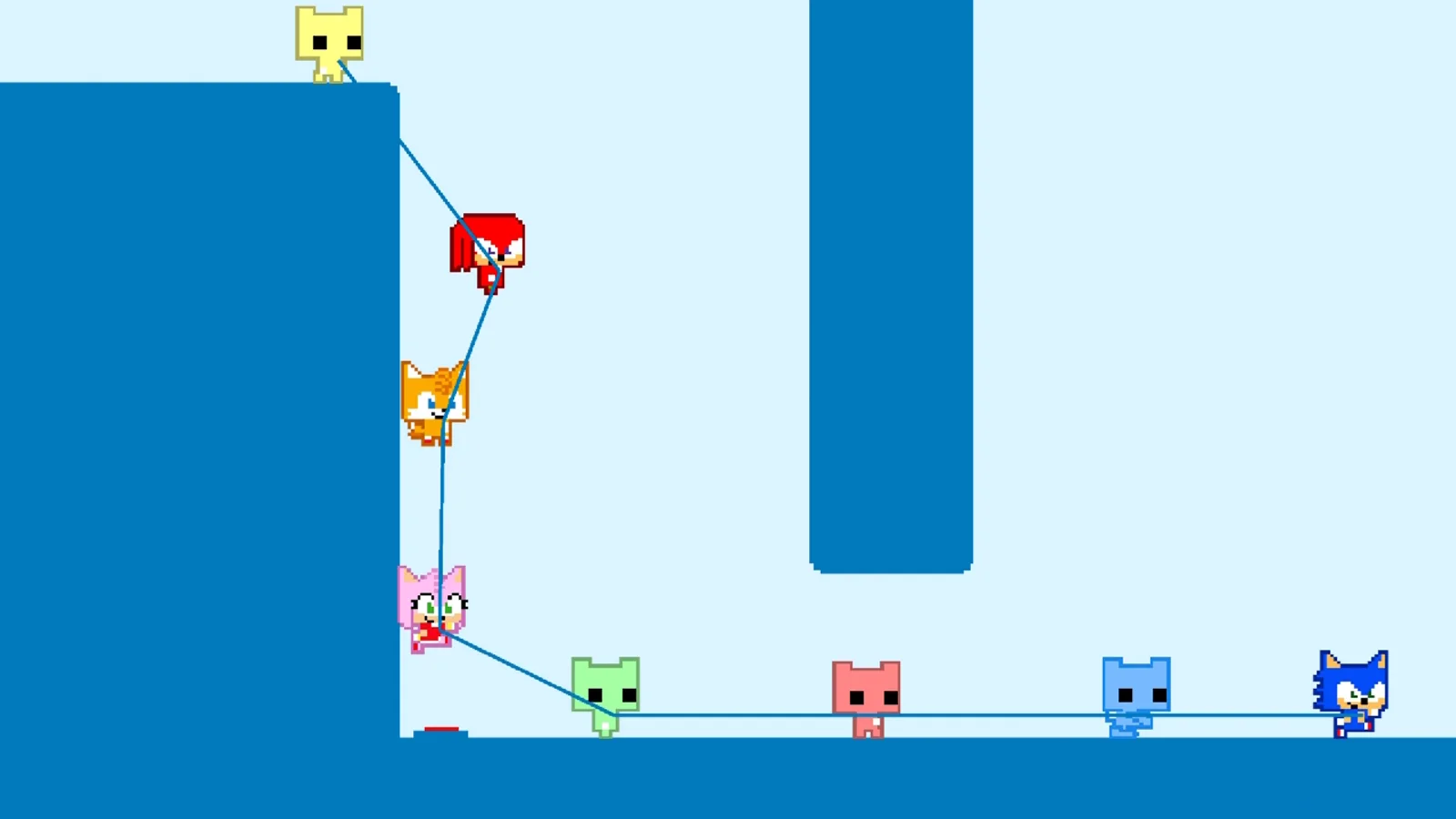
Stage 1-1: the Spin Dash lesson
The opening stage is a two-player room with a gap, a spring, and an on-screen prompt: Press the direction input to Spin Dash. The stage wants you to use the dash to cross the gap rather than jump it.
The solution
- Stand away from the ledge.
- Charge the Spin Dash until the character is visibly revving.
- Release toward the gap.
- Land on the far platform.
- Wait for the second player to cross before touching the plate.
The spring is the safety route. A player who misses the dash can use the spring to recover, which is why the stage is forgiving. The dash is still the intended lesson: it covers more distance than a jump, and every later world assumes you can use it.
Common failure
The most common mistake is charging toward the ledge. The dash launches forward, not upward, so a player who charges at the edge runs out of ground before the release. Charge away, release toward the target.
Stage 1-2: the first loop
The second stage introduces the loop. A loop is a speed gate: the character runs around it and comes out the other side. The stage is otherwise empty, which makes it a pure movement lesson.
The solution
- Approach the loop with forward momentum.
- Hold the movement direction through the loop.
- Do not jump in the middle of the loop.
- Wait at the exit for the second player.
The loop is not a puzzle. It is a readability lesson: the game wants players to understand that speed and direction matter, and that a loop is a path rather than an obstacle.
Stage 1-3: the ring prompt
The third stage prints the prompt Spin dash into your teammates for rings. This is the game's introduction to rings as a shared resource rather than a personal collectible.
The solution
- Collect the rings on the route.
- Use the dash to reach the ring cluster on the far side.
- Regroup before the gate or the plate.
- Do not spend the rings until the group is through.
The exact ring rule is taught by the prompt rather than by a menu. The practical takeaway is simple: rings are not just score, and a player who hoards them can block the group's progress. The ring economy section in the abilities guide → explains how gates use rings later.
Stage 1-4: the Tails carry
The fourth stage is the flight tutorial. Tails carries Sonic over a spike field, and the game prints Press A to stop flying while airborne. The button label depends on the platform, so read the on-screen prompt rather than a fixed key.
The solution
- Have Tails jump first and start the flight.
- Have Sonic touch Tails to be carried.
- Fly across the spike field.
- Stop the flight before the landing platform, not after.
- Drop Sonic on the safe side.
- Return for the second player if the group is larger.
The carry is one passenger at a time. A group of four will need two trips, and a group of eight will need seven. The stage is short, so the ferry is quick, but the habit matters in World 5 and beyond.
Common failure
The common failure is stopping the flight too late. The flight has a limited duration, and a passenger who is dropped over the spikes has to restart from the checkpoint. Stop early and walk the last few steps.
World 1 achievement
Clearing World 1 unlocks HELLO, SONIC PICO PARK, the first of the twenty achievements. The achievement pops when the fourth stage is cleared, not when the first stage starts. If it does not appear, check that every player touched the plate in 1-4.
The achievements guide → lists the full set and the fastest route to each unlock.
Co-op jobs for World 1
World 1 is simple enough that jobs are optional, but the habits are worth building:
- Flyer. Tails, Cream, Charmy, or Rogue for 1-4.
- Dasher. The player who is best at charging the Spin Dash.
- Anchor. The player who counts the group at the plate.
A two-player group can cover all three jobs with two people. A four-player group should assign them explicitly so nobody assumes someone else is doing the carry.
What World 1 does not teach
World 1 does not teach stacking, cracked walls, water, rails, darkness, or enemies. Those mechanics arrive in later worlds, and each one has a dedicated page:
- Stacking and spikes: World 2 →
- Ordered switches and tether: World 3 →
- Carry rooms and cracked walls: World 4 →
If your group is failing in World 2, the cause is usually the stack, not the loop. If it is failing in World 4, the cause is usually the carry timing.
Official source: SONIC PICO PARK official site ↗
Official source: Steam store page ↗
Siliconera's review ↗ describes the opening world's tutorial pacing. MonsterVine ↗ covers the first-world mechanics. The Nintendo product page ↗ confirms the two-to-eight player range.
FAQ
How many stages are in World 1?
Four stages: 1-1 through 1-4.
What does World 1 teach?
The Spin Dash, the loop, the ring-sharing prompt, and the flight carry.
How long does World 1 take?
About ten to fifteen minutes for a new group, less for a group that has played before.
What achievement does World 1 unlock?
HELLO, SONIC PICO PARK.
Can you skip World 1?
No. The worlds unlock in order, and the tutorial prompts are worth playing even for experienced groups.